Tango is More Than Steps and Figures
The Deeper Experience of Connection, Music and Presence
TANGOMINDFULNESS
Dr. Jutta Lenz
5/1/20264 min read
Tango is More Than Steps and Figures
The Deeper Experience of Connection, Music and Presence
At first glance, Argentine Tango can appear to be a dance of elegance, dramatic pauses and intricate footwork. Many people imagine it as a performance built on technical precision and beautifully executed figures. Yet anyone who has truly experienced tango soon discovers that something much deeper is taking place.
Tango is not simply about learning steps. It is about learning presence. It invites us into a space where connection, listening and awareness become more important than choreography. Within the embrace, music, movement and human sensitivity merge into a shared experience that is difficult to describe yet deeply meaningful. Perhaps this is one reason why so many people today, particularly those searching for authenticity, purpose and genuine connection, find themselves drawn to Argentine Tango.
Unlike many choreographed partner dances, Argentine Tango is fundamentally improvisational. Two people meet in an embrace and create the dance together in real time. There is no fixed sequence to memorise and no predetermined routine to follow. Instead, the dance unfolds through subtle communication, expressed through weight shifts, breathing, musical interpretation and shared intention. Every dance is unique because every moment is unique.
This improvisational nature often makes tango feel less like a performance and more like a conversation without words. Experienced dancers frequently describe it as a state of heightened awareness. Rather than thinking several moves ahead or trying to impress an audience, dancers learn to listen with their bodies. Attention shifts away from external concerns and settles into the present moment.
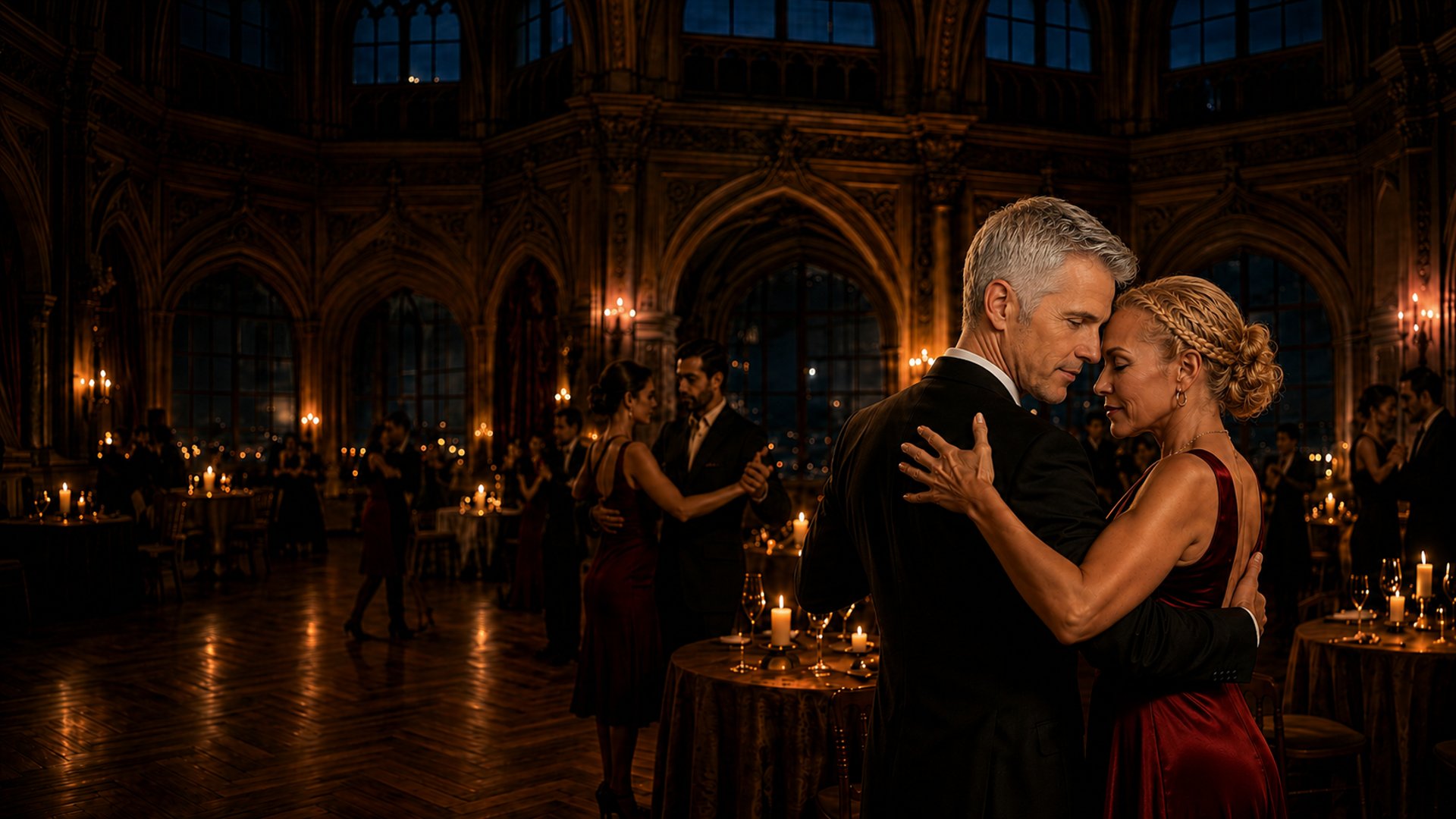
Central to this experience is the abrazo, the embrace. Interestingly, the word abrazo simply means “hug” in Spanish. It serves as a reminder that tango was never intended as a spectacle for spectators but as a profoundly human social dance built on connection and communication. Within the embrace, two people share a moment of mutual awareness where movement becomes a form of dialogue.
This is especially significant in today's world. Modern life offers countless ways to communicate, yet many people report feeling increasingly disconnected. We exchange messages, attend meetings and remain digitally connected throughout the day, while genuine human connection often feels surprisingly rare. Tango offers something different.
Within the embrace, two people engage in coordinated movement, mutual attention and non-verbal communication. The dance requires sensitivity rather than domination, listening rather than control. Sociological studies examining tango communities have described tango as creating a unique form of intimacy. This intimacy is not necessarily romantic, but relational. Dancers often experience moments of trust, closeness and belonging that exist outside conventional social expectations. For many people, tango becomes far more than a hobby. It becomes a community and a place where meaningful human connections are formed.
What dancers have intuitively experienced for generations is increasingly being supported by scientific research. Studies suggest that Argentine Tango simultaneously engages multiple dimensions of human functioning, including physical movement, musical processing, emotional regulation, cognitive attention and social interaction. This combination appears to create measurable benefits for both body and mind.
Research involving adults over forty has shown that regular tango practice can improve functional fitness, enhance balance and mobility, reduce blood pressure and support emotional wellbeing. Other studies comparing tango with mindfulness meditation have found reductions in stress, anxiety and depressive symptoms, alongside increases in overall wellbeing. One reason may be that tango demands complete attention. The music changes constantly, partners respond to one another, and the movement of other dancers around the floor requires ongoing awareness. It is impossible to remain mentally absent while dancing tango.
In this sense, tango becomes a form of moving mindfulness. Rather than sitting quietly and observing the breath, dancers practise awareness through movement, relationship and music. The dance gently pulls attention away from worries about the past or future and anchors it firmly in the present moment.
Music plays an equally important role in this experience. In tango, the music is often described as the third partner in the dance. Traditional orchestras such as those led by Di Sarli, Troilo and Pugliese create rich emotional landscapes that range from tenderness and nostalgia to tension, passion and joy. Rather than simply counting beats, dancers learn to embody the feeling of the music itself.
This emotional depth is rooted in tango’s history. Emerging in the late nineteenth century in the working-class districts of Buenos Aires and Montevideo, tango developed among immigrants, labourers and displaced communities. Its melodies carried stories of longing, homesickness, resilience and hope. Perhaps this is why tango music often touches something difficult to explain. It speaks not only to happiness but also to the richness and complexity of the human experience.
When movement and music merge, dancers often enter what psychologists call a flow state—a condition of absorbed attention in which self-consciousness temporarily fades away. In these moments, time seems to slow down, distractions disappear and only the dance remains.
Many people initially come to tango for practical reasons. They want exercise, better balance, improved coordination or simply a new activity. Tango certainly provides all of these benefits. Studies have documented improvements in mobility, posture, cognitive engagement and overall physical wellbeing. It has even been explored therapeutically in areas such as healthy ageing and neurological rehabilitation.
Yet most dancers remain involved for reasons that extend far beyond physical exercise. Tango invites emotional courage. It teaches patience when things do not go as planned. It encourages adaptability when expectations fail. It develops sensitivity, respect for boundaries and a deeper awareness of another person. Increasingly, psychologists and therapists recognise tango as an embodied relational practice that helps cultivate emotional regulation, mindfulness and interpersonal awareness.
In a culture often dominated by speed, distraction and constant stimulation, tango asks something radically different of us. It invites us to slow down, listen, feel and respond. These simple actions can be surprisingly transformative.
Perhaps this is the true secret of tango. Over time, many dancers notice that the lessons learned on the dance floor begin to influence their everyday lives. They become more attentive, more comfortable with uncertainty and more aware of communication that extends beyond words. Tango teaches a profound truth: genuine connection is not created through perfect performance but through presence.
This may explain why tango continues to captivate people around the world. Not because it offers flawless technique or spectacular figures, but because it allows us, if only for a few precious minutes, to experience what genuine human connection, music and mindful presence truly feel like.
Tango is far more than a dance. It is an encounter. A conversation. A shared moment of awareness. And perhaps, above all, it is a quiet art of being fully alive.
To learn more about upcoming tango workshops, performances, seminars, and events with Beat & Jutta, visit A Kind Of Tango Official Website or follow their journey on Instagram and Facebook.
