
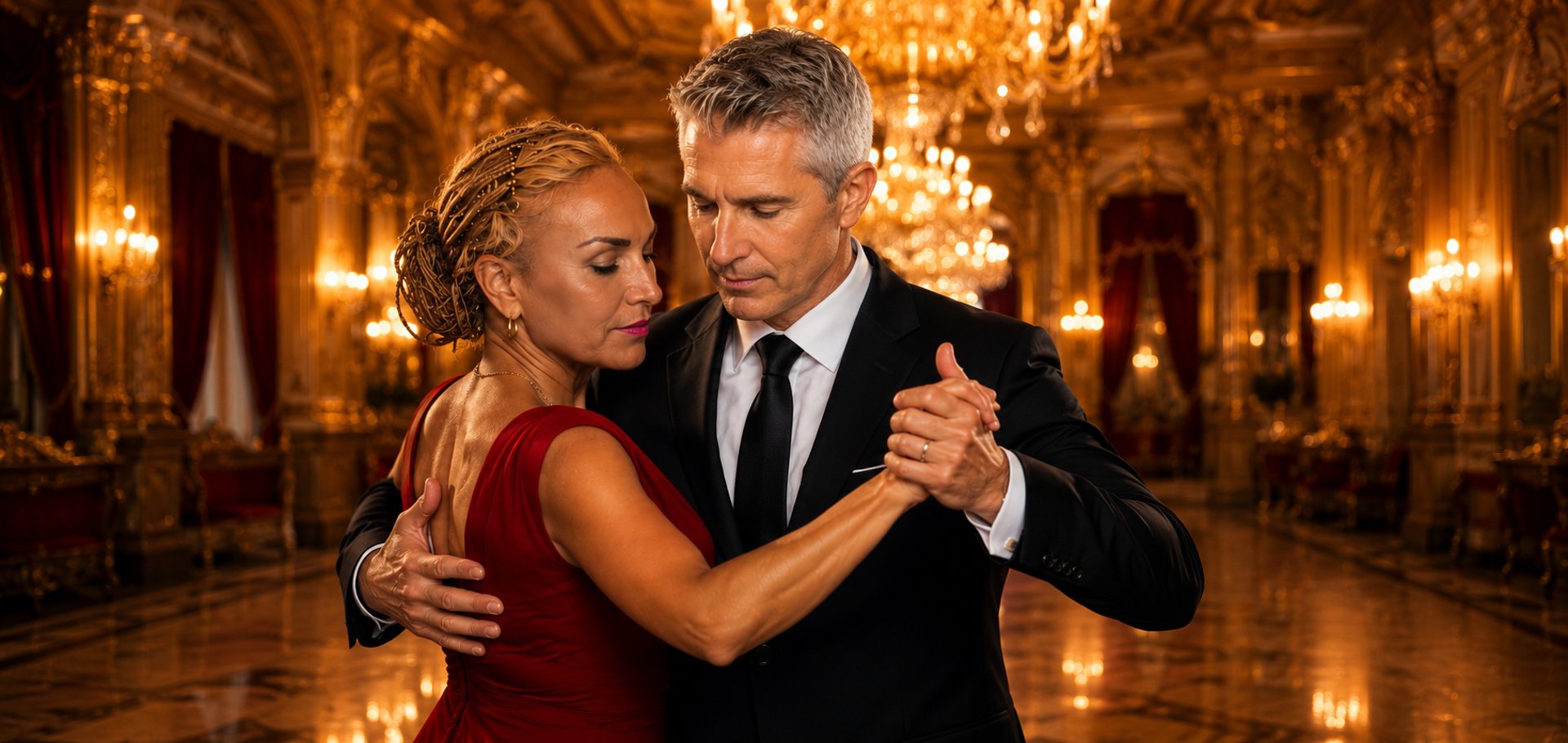
Tango as Moving Mindfulness
Discover how Argentine Tango can become a powerful form of moving mindfulness. Learn how music, movement, and connection help quiet the mind, reduce stress, and bring you fully into the present moment. Explore why tango is much more than a dance—it's a pathway to greater awareness, wellbeing, and authentic human connection.
TANGOMINDFULNESS
Dr. Jutta Lenz
6/1/20265 min read
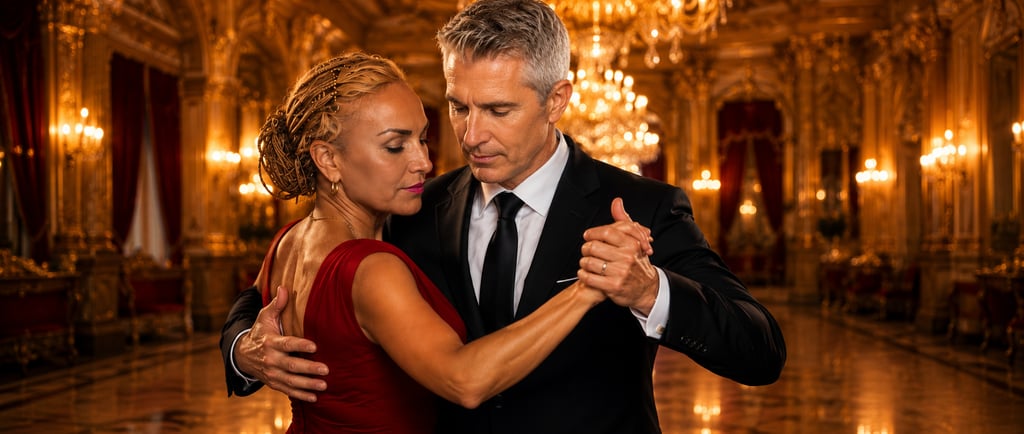
Tango as Moving Mindfulness
Why Tango Can Calm the Mind and Bring Us into the Present Moment
In a world that rarely slows down, many people are searching for ways to find a little peace. Meditation apps, breathing exercises, and mindfulness practices have become part of everyday life as we look for ways to manage stress and quiet the constant chatter of the mind.
Yet for many people, sitting still and trying not to think can feel surprisingly difficult. The harder we try to silence our thoughts, the louder they sometimes seem to become.
But what if mindfulness didn't have to happen sitting cross-legged on a cushion?
What if presence could be experienced through movement, music, and human connection?
This is where Argentine Tango offers something truly special. Far beyond learning steps or mastering techniques, tango can become a form of moving mindfulness—a practice that gently draws us away from mental noise and brings us fully into the richness of the present moment.
The Mind That Never Stops
Most of us know what it's like to be physically present while our minds are somewhere else entirely.
We replay conversations from yesterday, mentally rehearse tomorrow's tasks, or worry about situations that may never happen. Psychologists often refer to this as "mind wandering." While it's a completely normal part of being human, spending too much time caught in endless thinking can leave us feeling stressed, exhausted, and disconnected from the present.
Mindfulness offers an alternative. At its core, mindfulness is simply the practice of paying attention to what is happening right now, with awareness and without judgement.
Traditionally, mindfulness is cultivated through meditation. Yet it can also arise naturally through activities that completely absorb our attention—and Argentine Tango is remarkably effective at doing exactly that.
Why Tango Demands Presence
Argentine Tango is unlike many partner dances because it is not built around memorised choreography. Instead, it is an improvised conversation between two people.
Each movement is created in the moment through subtle communication, musical interpretation, and awareness of the space around you. Every dance is unique. No two tandas are ever exactly the same.
This means something fascinating happens when you step onto the dance floor: you cannot truly dance tango while your mind is elsewhere.
Your partner changes weight. The music shifts. The embrace communicates. Other couples move around you. Every moment requires attention.
If your thoughts drift too far into worries, plans, or distractions, the connection immediately begins to fade. Tango gently calls you back to the present again and again.
Over time, dancers develop a rare and valuable skill: the ability to stay present.
Many tango teachers talk about "listening with the body." This is not simply a poetic expression—it is the essence of the dance itself. The body becomes more attentive, the mind grows quieter, and awareness becomes sharper.
Rather than thinking about the moment, you begin to live inside it.
What Research Says About Tango and Mindfulness
What many tango dancers have experienced intuitively for years is now being explored by researchers.
One notable Australian study compared Argentine Tango classes with mindfulness meditation and a control group among participants experiencing depression and psychological distress. The results were particularly interesting.
Both meditation and tango helped reduce symptoms of depression. However, participants who attended tango classes also experienced significant reductions in stress levels. Researchers further found that tango participation increased mindfulness itself.
The conclusion was encouraging: Argentine Tango may be a valuable complementary practice for supporting emotional wellbeing and managing stress.
This does not mean tango replaces therapy, meditation, or professional support. What it does suggest is something quite profound: Mindfulness is not limited to stillness. It can also be cultivated through movement, connection, and embodied experience.
The Nervous System and the Tango Embrace
Part of tango's calming effect may be linked to the way it influences our nervous system.
Modern life often keeps us in a low-level state of fight-or-flight. Deadlines, responsibilities, constant notifications, and ongoing demands can leave the body tense and the mind overstimulated. Tango encourages the opposite.
The dance invites grounded posture, steady breathing, and coordinated movement. The embrace itself creates a sense of connection, safety, and orientation. When two dancers move together with trust and attentiveness, breathing often becomes slower and more synchronised. The body receives subtle signals that it can relax and settle.
This may help explain why many dancers leave a milonga feeling calmer, lighter, and more balanced than when they arrived. The experience is not only emotional or social—it is also physical. Emerging research continues to explore tango's positive effects on mood, sleep quality, overall wellbeing, and quality of life among regular dancers.
Music That Anchors Awareness
Another reason tango feels so meditative lies within its music. Traditional tango orchestras invite far more than simply keeping time. They invite us to listen deeply.
The elegant pauses of Di Sarli, the dramatic intensity of Pugliese, and the lyrical beauty of Troilo all encourage a different kind of attention. Tango dancers soon discover that dancing every beat is not the goal. Often, the most meaningful moments occur in the spaces between movements.
A pause.
A shared breath.
A moment of stillness held together within the music.
Experienced dancers frequently describe these moments not as inactivity, but as heightened awareness. Listening becomes deeper than movement itself. In many ways, this mirrors mindfulness practice. Presence is not about doing more. It is about noticing more.
From Performance to Awareness
Many beginners start tango believing success comes from learning increasingly complex figures. Over time, something surprising often happens. They discover that the most memorable dances are rarely the most complicated. Instead, they are the dances where connection feels effortless, communication flows naturally, and awareness becomes vivid.
Modern psychological perspectives increasingly view tango as an embodied and relational practice—one that can support emotional regulation, empathy, and deeper interpersonal awareness. In this sense, tango teaches a lesson that extends far beyond the dance floor: Presence matters more than perfection. The quality of our attention shapes the quality of our experience.
Tango as Meditation in Motion
At first glance, meditation and tango may seem worlds apart. One is often quiet and solitary. The other is musical, social, and shared. Yet both invite us to step away from automatic thinking and into conscious experience. Both encourage us to observe rather than control, to listen rather than rush, and to become fully aware of what is happening right now.
Perhaps this is why so many dancers speak about tango in deeply personal terms. Not simply as a dance. Not merely as a hobby. But as a refuge.
A place where worries soften. Where time seems to slow down. Where the endless commentary of the mind fades into the background. For a few precious minutes, the future no longer demands attention. The past loosens its grip. There is only the music, the breath, the movement, and the connection. And perhaps that is mindfulness in one of its most beautiful forms. Not an escape from life, but a deeper way of entering it.
One step.
One breath.
One dance at a time.
At A Kind of Tango, we welcome beginners and experienced dancers alike into a warm and supportive environment where learning becomes enjoyable, connection comes naturally, and every step offers an opportunity to become more present, more aware, and more fully alive.
To learn more about upcoming tango workshops, performances, seminars, and events with Beat & Jutta, visit A Kind Of Tango Official Website or follow their journey on Instagram and Facebook.
