More Than Steps and Figures
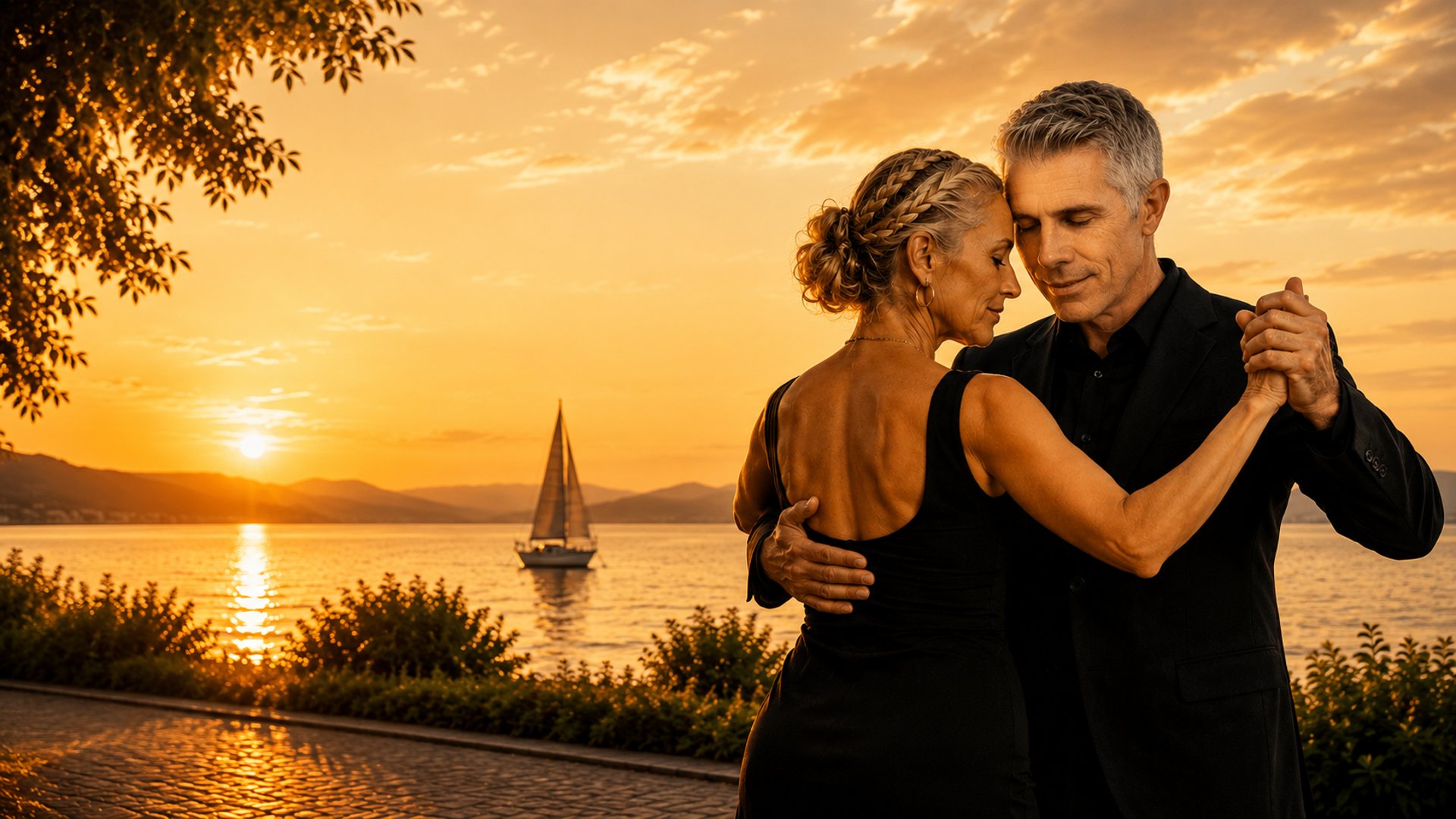
Tango is not merely about learning steps. It is about learning presence. It is about connection, listening and entering a moment where music, movement and human awareness meet.
MINDFULNESSDANCE FESTIVALSTANGO
Dr. Jutta Lenz
6/4/20268 min read
The Deeper Experience of Connection, Music and Presence
At first glance, tango may appear to be a dance of elegant movements, dramatic pauses and intricate footwork. Many people imagine it as a performance of perfected figures and technical precision. But if you had a great teacher in tango who knows about the deeper level of Argentine Tanyou also will know that something deeper is happening.
Tango is not merely about learning steps. It is about learning presence. It is about connection, listening and entering a moment where music, movement and human awareness meet. This may explain why so many people, particularly adults seeking meaning and authenticity, are drawn to tango today. The Dance That Cannot Be Fully Explained Unlike choreographed partner dances, Argentine Tango is fundamentally improvisational.
Two people meet in an embrace and create the dance in real time. There is no fixed sequence to memorise and no predetermined routine. Instead, tango develops through subtle communication — weight shifts, breathing, musical interpretation and shared intention. This is one reason tango often feels less like performing and more like having a conversation without words.
Experienced dancers frequently describe tango as a state of heightened awareness. You are not thinking several moves ahead or attempting to impress an audience. You are listening with the body. The Argentine term abrazo — the embrace — is central here. Interestingly, abrazo simply means “hug,” reminding us that tango was born not as spectacle but as a profoundly human social dance.
Connection Beyond Conversation
Modern life offers constant communication yet often very little genuine connection. We exchange messages, attend meetings and remain digitally connected, while many people quietly report feeling emotionally distant or socially isolated.
Tango offers something unusual : in the embrace, two strangers or partners share coordinated movement, mutual attention and non-verbal communication. The dance requires sensitivity rather than domination, listening rather than control.
Sociological research examining tango communities describes tango as creating a unique form of intimacy — not necessarily romantic, but relational. Dancers often experience moments of closeness and trust that exist outside conventional social roles or expectations. This may be one reason tango communities around the world become meaningful social spaces. Many dancers speak not only of learning a dance but of finding belonging.
Tango and the Science of Presence
What dancers have long experienced intuitively is increasingly supported by research. Studies suggest that Argentine Tango engages multiple dimensions of human functioning simultaneously: physical movement, musical processing, emotional regulation, cognitive attention and social interaction. This combination appears to have measurable benefits.
A recent study involving adults over forty found that regular tango practice improved functional fitness and reduced systolic blood pressure while helping maintain emotional wellbeing and quality of life. Other research comparing tango with mindfulness meditation found that tango classes were associated with reductions in stress, anxiety and depressive symptoms while increasing wellbeing.
Why might this be? Because tango demands full attention. You cannot remain mentally absent while dancing tango, the music changes, your partner responds, the floor moves around you, every step asks for awareness.
In this sense, tango becomes a moving form of mindfulness. Instead of sitting still and observing the breath, dancers practise awareness through motion and relationship.
Music You Do Not Merely Hear — But Embody
Tango music is not background entertainment. It is the third partner in the dance. Traditional tango orchestras such as those of Di Sarli, Troilo or Pugliese carry emotional landscapes ranging from tenderness and nostalgia to tension and joy. The music invites dancers not merely to count rhythm but to embody feeling.This emotional depth is rooted in tango’s history.
Emerging in the late nineteenth century in the working-class districts of Buenos Aires and Montevideo, tango evolved among immigrants, labourers and displaced communities. Its melodies carried homesickness, longing and resilience.
Perhaps this is why tango music often touches something difficult to name. It speaks not only to happiness but to the complexity of being human. When movement and music merge, dancers often report entering what psychologists describe as a “flow state” — a condition of absorbed attention where self-consciousness temporarily dissolves.
More Than Exercise
Many people begin tango for practical reasons. They want movement, fitness, balance or a new hobby. And indeed, tango offers substantial physical benefits. Studies have documented improvements in balance, mobility, coordination and cognitive engagement, which is why tango has even been explored therapeutically in areas such as ageing and neurological rehabilitation. Yet most dancers stay for reasons that go beyond exercise. Tango invites emotional courage.
It teaches patience when the dance does not flow. It teaches adaptability when expectations fail. It teaches respect for boundaries and sensitivity toward another human being. Psychological and therapeutic perspectives increasingly recognise tango as an embodied relational practice — a space where awareness, emotional regulation and interpersonal sensitivity can be cultivated.
In a culture often dominated by speed and distraction, tango asks for something radically different:
Slow down.
Listen.
Feel.
Respond.
Tango as a Way of Being
Perhaps this is the real secret of tango. The dance is never only happening on the dance floor.
Over time, many dancers notice that tango begins to influence how they move through life itself. They become more attentive, more comfortable with uncertainty, more aware of communication beyond words. Because tango teaches a profound lesson:
Connection is not created through perfect performance, it is created through presence, that may be why tango continues to captivate people around the world.
Not because it offers flawless steps or spectacular figures — but because for a few precious minutes, it allows us to experience what genuine human connection, music and mindful presence can feel like.
Tango, then, is far more than a dance. It is an encounter. A conversation. And perhaps, a quiet art of being fully alive.
This version is ready for publication. If you would like, I can also create:
a stronger SEO-optimised version for your website,
suggested headings and metadata,
or a matching banner image for the blog.
How Argentine Tango Helps Reduce Stress and Everyday Pressure
Why Music and Mindful Movement Support Emotional Balance. Stress has become one of the defining challenges of modern life.
Many of us wake up to notifications before we even get out of bed. Our days are filled with deadlines, responsibilities, appointments and endless streams of information. Even during moments of rest, our minds often continue working, planning and worrying. Over time, this constant pressure can affect our mood, sleep, relationships and overall wellbeing. It is no surprise that more people are searching for healthy ways to slow down, reconnect with themselves and find greater emotional balance.
Surprisingly, one of the most effective ways to do this may not involve sitting still at all.It may involve music, movement and a simple embrace. This is one of the reasons why Argentine Tango is increasingly being recognised not only as a beautiful social dance, but also as a powerful practice for stress reduction and emotional wellbeing.
Understanding Stress in Modern Life
Stress itself is not necessarily harmful. Our stress response evolved to help us react quickly to challenges and threats. When we perceive danger or pressure, the body releases hormones such as adrenaline and cortisol, increasing alertness and preparing us for action. The problem arises when this response remains activated for long periods.
Chronic stress can contribute to:
fatigue and low energy
difficulty concentrating
poor sleep quality
anxiety and irritability
muscle tension and physical discomfort
reduced emotional resilience
Many people spend years functioning in a state of low-level stress without fully realising how much it affects their quality of life. Finding activities that help regulate the nervous system has therefore become increasingly important.
Why Tango Is Different From Ordinary Exercise
Physical activity is well known for its positive effects on stress and mental health. Walking, swimming and cycling can all improve mood and support physical wellbeing. However, Argentine Tango offers something unique because it combines several powerful elements at the same time:
physical movement
music
social connection
mindfulness
creativity
emotional expression
Researchers increasingly recognise that activities engaging multiple dimensions of human experience often have a stronger impact on wellbeing than activities focusing on only one aspect. Tango engages the body, mind and emotions simultaneously. This creates a particularly rich experience that many dancers describe as deeply restorative.
The Power of Mindful Movement
One of the key reasons tango can reduce stress is that it encourages mindfulness. Mindfulness simply means bringing attention to the present moment. This sounds simple, but many people spend much of their day mentally dwelling on the past or worrying about the future.
Tango gently interrupts this pattern. When dancing, attention naturally shifts toward:
the music
the rhythm
the partner
balance and posture
movement through space
There is little room left for repetitive worrying. The dance requires presence. Many dancers report that during a tango, their usual mental chatter fades into the background. For a few minutes, they are completely absorbed in the experience.
Psychologists often describe this as a flow state — a state of focused attention associated with reduced stress, increased enjoyment and improved emotional wellbeing.
What Research Says About Tango and Stress
Scientific studies are beginning to support what tango dancers have known for years. A study conducted in Australia compared Argentine Tango classes with mindfulness meditation and a control group. Researchers found that tango participants experienced significant reductions in stress and depressive symptoms while also showing increased mindfulness.
The researchers concluded that tango may provide meaningful psychological benefits through its combination of movement, social interaction and present-moment awareness. Other studies examining dance and wellbeing have reported improvements in mood, quality of life and emotional resilience among regular participants. While tango is not a substitute for professional mental health care when needed, the evidence suggests it can be a valuable complementary practice for supporting emotional wellbeing.
Music as Emotional Medicine
One of tango's greatest gifts is its music. Music has accompanied human beings for thousands of years and plays an important role in emotional regulation. Research shows that music can influence mood, reduce perceived stress and even affect physiological processes such as heart rate and breathing.
Tango music offers something particularly special. It contains moments of passion, tenderness, melancholy, joy and hope. The great tango orchestras invite us to feel rather than simply think. Many dancers arrive at a milonga carrying the weight of the day, then the music begins, gradually, attention shifts.
The emotional landscape changes, the worries that seemed overwhelming a short time ago begin to lose their intensity. Music helps create the bridge between stress and relaxation.
The Calming Effect of Human Connection
Another important reason tango supports emotional balance is connection. Human beings are social creatures. Research consistently shows that meaningful social interaction contributes to psychological wellbeing and resilience. Unfortunately, many adults experience increasing levels of loneliness and social isolation despite being digitally connected.
Tango offers something different. It creates a respectful and structured environment for genuine human interaction.People meet,they share music,they communicate through movement. They experience connection without needing to impress or compete. The embrace itself encourages trust, attentiveness and cooperation. For us dancers, this sense of belonging becomes one of the most valuable aspects of the tango community.
Breathing, Relaxation and the Nervous System
When we humann beings are stressed, their breathing often becomes shallow and rapid. This can reinforce feelings of tension and anxiety. Experienced tango dancers quickly learn that relaxed breathing improves everything.
When breathing becomes slower and more natural:
movement becomes smoother
posture improves
connection deepens
tension decreases
The body receives signals that it is safe to relax. We dancers, describe leaving a tango evening feeling lighter, calmer and more grounded than when they arrived. This is not simply a psychological effect. It reflects real changes in how the nervous system responds to movement, music and connection.
More Than a Dance Class
People often begin tango because they want to learn something new. Perhaps they are attracted by the music, the elegance or the social aspect.But what many discover is something much deeper: Tango becomes a weekly opportunity to step away from everyday pressures.
For a few hours: There are no emails,no deadlines, no multitasking, only music, only movement, only connection. In a world that constantly demands attention, this experience can feel profoundly refreshing.
A Path Back to Balance
Argentine Tango does not remove life's challenges, work responsibilities remain, family commitments continue.The world does not suddenly become less complicated.
But tango offers something equally valuable :
It teaches us how to pause.
How to breathe.
How to listen.
How to reconnect with the present moment.
Through music, mindful movement and human connection, tango creates a space where stress softens and balance returns. Perhaps this is why so many dancers describe tango not simply as a hobby, but as an essential part of their wellbeing.
Because sometimes the most effective way to manage stress is not to fight it. Sometimes it is to step onto a dance floor, embrace another human being, listen to the music and remember what it feels like to be fully present.
To learn more about upcoming tango workshops, performances, seminars, and events with Beat & Jutta, visit A Kind Of Tango Official Website or follow their journey on Instagram and Facebook.
