Meditation in Motion – Can Tango Be a Form of Meditation?
Discover Why So Many People Experience Argentine Tango as Moving Meditation.
MINDFULNESSDANCE FESTIVALSTANGO
Dr. Jutta Lenz
6/7/20264 min read
Discover Why So Many People Experience Argentine Tango as Moving Meditation
When most people hear the word meditation, they imagine sitting quietly with their eyes closed, focusing on their breathing and attempting to calm the endless stream of thoughts running through their minds. While this traditional form of meditation has proven benefits, it is not always easy. Many people find it difficult to sit still, quiet their minds, or maintain focus for extended periods.
But what if meditation did not require stillness? What if mindfulness could be experienced through movement, music, and human connection?
For countless dancers around the world, Argentine Tango provides exactly that experience. It is often described as "meditation in motion" because it creates a unique state of presence where everyday worries fade into the background and attention becomes fully absorbed in the moment. Far more than simply learning dance steps, Tango offers an opportunity to reconnect with oneself, with another person, and with the present moment in a way that is both deeply calming and profoundly rewarding.
Modern life constantly competes for our attention. Emails arrive, phones ring, social media demands engagement, and our minds are often occupied with concerns about the future or reflections on the past. As a result, many people spend surprisingly little time fully present in their daily lives. Tango changes that.
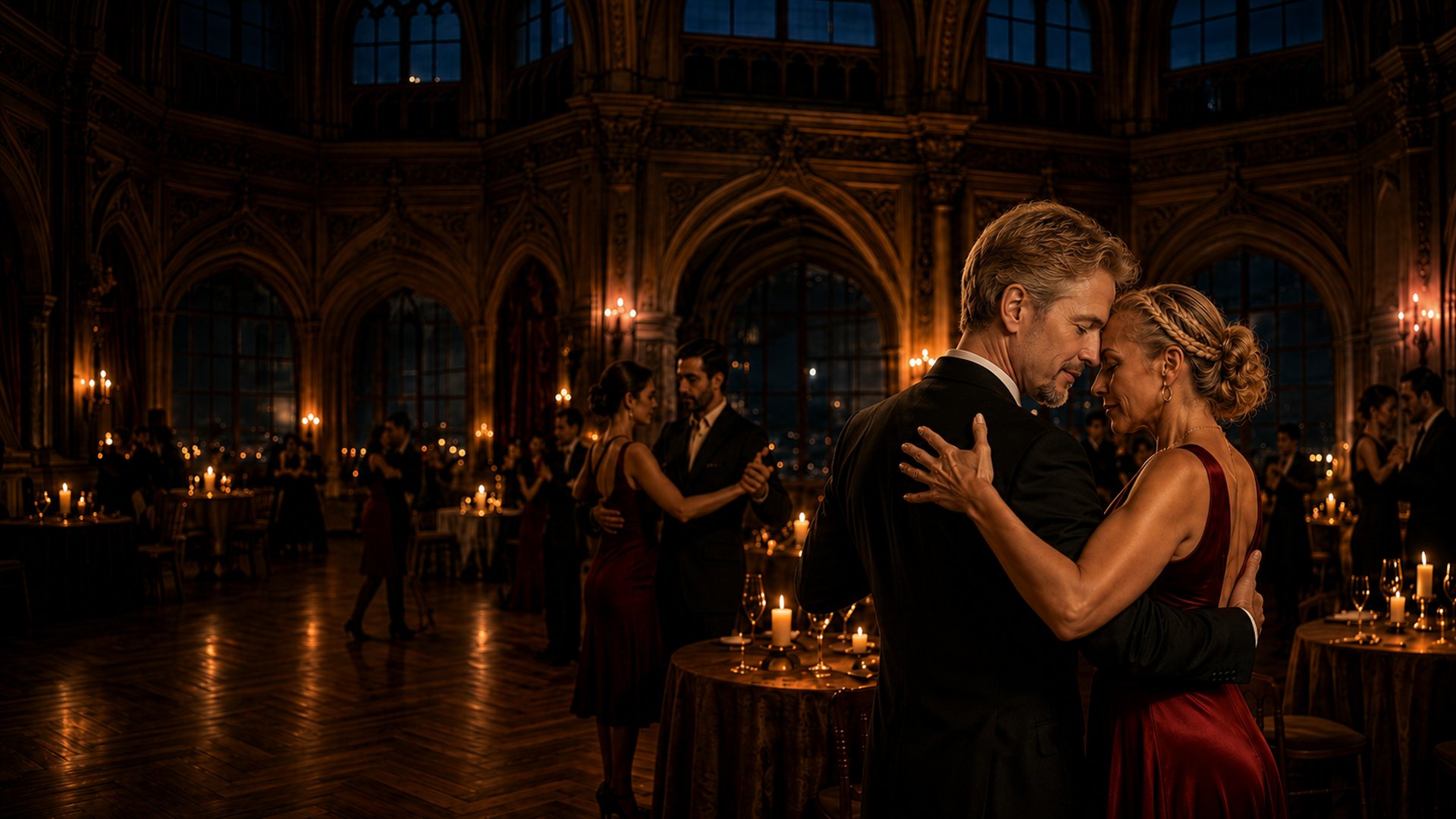
The moment a dance begins, something remarkable happens. Your attention naturally shifts to the music, your posture, your balance, and the subtle communication taking place between you and your dance partner. You listen, respond, adapt, and move together in harmony. Because the dance requires your full attention, there is little room left for the mental chatter that so often dominates our thoughts. For a brief period of time, the outside world disappears and only the present moment remains.
This experience closely resembles what psychologists and mindfulness practitioners describe as a state of presence. Rather than dwelling on yesterday's problems or tomorrow's responsibilities, your awareness becomes fully anchored in what is happening right now.
One of the most fascinating concepts in modern psychology is the state known as "Flow," first described by psychologist Mihaly Csikszentmihalyi. Flow occurs when a person becomes so completely absorbed in an activity that they lose track of time and become fully immersed in the experience itself. Athletes, musicians, artists, and performers frequently describe this state, and Tango dancers often report very similar experiences.
When dancing Tango, concentration becomes effortless. Self-consciousness fades away, movements feel natural, and the dance itself becomes deeply satisfying. Many dancers describe feeling as though time slows down or even disappears altogether. They leave the dance floor feeling refreshed, energised, and surprisingly peaceful. These experiences bear a striking resemblance to those reported by people who practise meditation regularly.
Neuroscience is beginning to explain why this happens. Researchers have discovered that activities requiring focused attention and present-moment awareness can quiet parts of the brain associated with overthinking, worrying, and self-criticism. When these mental processes become less active, people often experience greater calm, emotional balance, and mental clarity. Because Tango requires continuous attention to movement, music, and connection, it naturally encourages this shift in mental state.
What makes Argentine Tango particularly unique is the role of human connection. Unlike many forms of exercise, Tango is danced with another person. The embrace, which is central to the dance, creates a feeling of trust, safety, and connection. Research has shown that positive human contact can stimulate the release of oxytocin, sometimes referred to as the "bonding hormone." Oxytocin has been associated with reduced stress, increased feelings of trust, and improved emotional wellbeing.
In a world where genuine human connection is becoming increasingly rare, the simple act of moving together to music can have a profound impact. The embrace encourages dancers to slow down, relax, and become more aware of both themselves and their partner. Many people find this experience deeply comforting and surprisingly therapeutic.
Another reason Tango can feel meditative is that communication takes place largely without words. In everyday life, we rely heavily on conversation, explanation, and analysis. In Tango, communication happens through movement, posture, rhythm, and subtle shifts of weight. Partners learn to listen with their bodies rather than their ears. This creates a different kind of awareness—one that requires sensitivity, attention, and presence.
Music also plays a powerful role in the experience. The rich and emotional music of Argentine Tango has a unique ability to draw dancers into the present moment. Rather than analysing the music, dancers begin to feel it. The rhythm guides movement, the melody evokes emotion, and the pauses invite reflection. Gradually, the mind becomes quieter and awareness becomes deeper.
we dancers describe Tango as one of the few activities in our lives where they are completely present. During the dance, there are no emails to answer, no deadlines to meet, and no distractions demanding attention. There is only the music, the movement, and the connection with another human being. This combination creates a powerful antidote to the stress and busyness of modern life.
Perhaps this is why so many people who begin Tango for exercise, social connection, or curiosity often discover something much more meaningful. They discover moments of stillness within movement, peace within connection, and joy within presence. They discover that mindfulness does not always require sitting on a meditation cushion. Sometimes it can be found while walking across a dance floor in the embrace of another person.
Argentine Tango offers a rare opportunity to slow down in a fast-moving world. It invites us to be fully present, to listen deeply, to connect authentically, and to experience life one step at a time. For many dancers, this is what makes Tango so much more than a dance. It becomes a practice of awareness, a source of wellbeing, and a pathway to inner calm.
Perhaps the greatest lesson Tango teaches us is that happiness is often found not in thinking about life, but in fully experiencing it. And sometimes, that journey begins with a single step onto the dance floor.
To learn more about upcoming tango workshops, performances, seminars, and events with Beat & Jutta, visit A Kind Of Tango Official Website or follow their journey on Instagram and Facebook.
